

Rethinking Fast Fashion
Out with the old in with the new, the fashion craze spreading like wildfire, igniting trends that blaze brightly before quickly fizzling out. Yet, behind the glitz and glamour lies a sobering reality: a relentless cycle of consumption and disposal that exacts a heavy toll on our planet and its people.
If that didn’t ignite a moment of reflection on our choices, let's imagine a scenario where clothes are more than just fabric and instead represent the impact of our constant craving for the newest fashion trends. This scenario is the realm of “fast fashion”, like a high-speed train hurtling through landscapes of environmental degradation and human exploitation. It’s crucial to take a moment to consider the true cost of our sartorial indulgence.
Given the harsh realities we're facing, it's clear that a major change in perspective is not just something we should want, but something we need. “Rethinking Fast Fashion” encourages us to critically examine the current state of the fashion industry, urging us to reconsider the constant chase for trends that come at the cost of our environment and the well-being of its inhabitants. This calls us to embrace a fashion vision that goes beyond the temporary, instead, based on sustainability, ethical practices, and mindful consumption.
What is Fast Fashion?
Fast fashion is all about the latest clothing design, production, and promotion trends. It’s about producing affordable clothing rapidly to keep up with the latest trends. This process revolves around the swift transition of designs from the runway to the retail shelves, catering to the ever-growing desire of consumers for trendy apparel that is also budget-friendly. Fast fashion brands tend to prioritize speed and affordability over quality and sustainability. This often leads to short product life cycles, frequent collections, and a heavy reliance on inexpensive labor and materials.
The True Cost of Trendiness
Synthetic Fabrics and Non-Renewable Resources
The surge of fast fashion has caused significant destruction to the environment. According to the World Bank, global clothing production has doubled from 2000 to 2014, reaching a staggering 100 billion garments annually. This breakneck speed at which we consume new clothes comes at a cost, with the environment paying the price for our voracious appetite for fashion. When it comes to the fabrics we wear, there's a hidden side that we need to be aware of. Many are made from synthetic materials, like polyester, derived from non-renewable resources such as petroleum. It's important to consider the environmental impact of these fabrics, as they can take centuries to decompose and contribute to the depletion of finite resources.
Textile Waste: The Growing Crisis
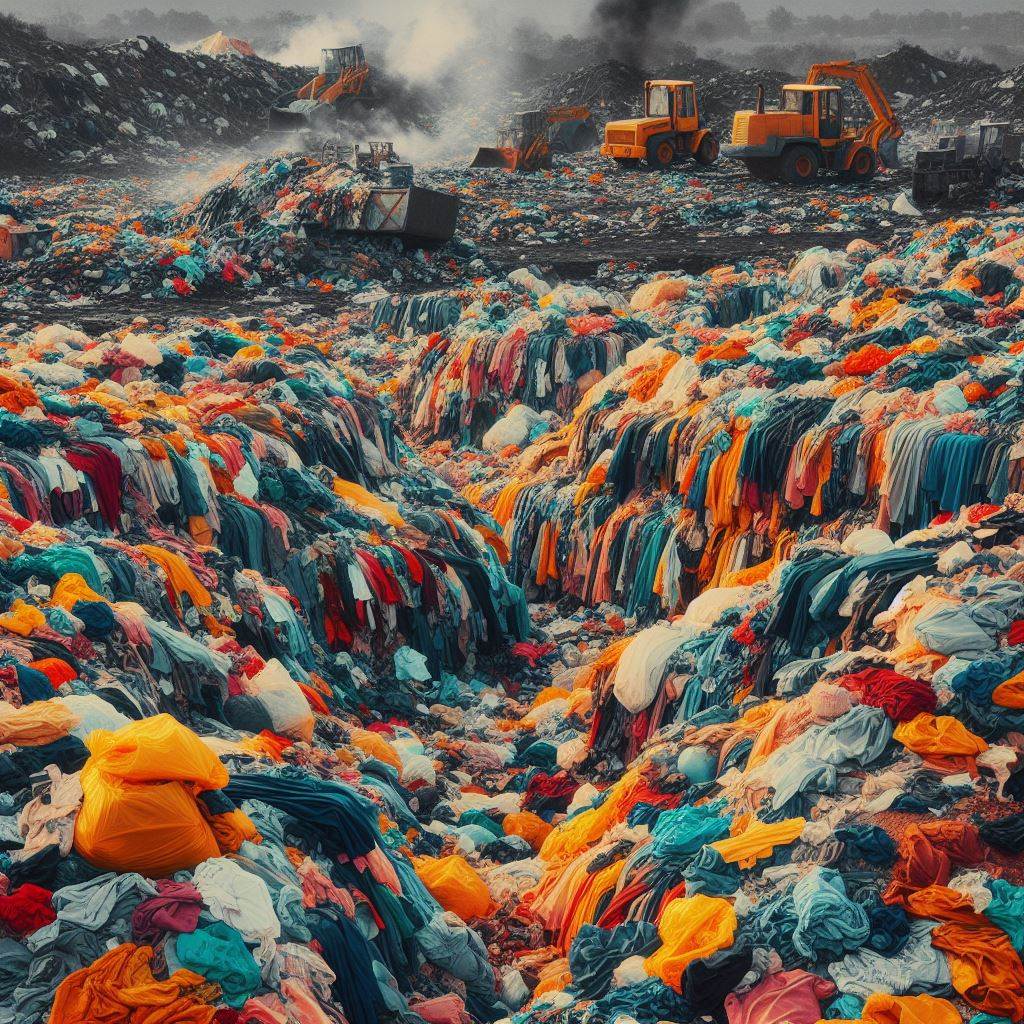
Fast fashion's toll on the environment extends beyond the production stage, creating a ripple effect throughout the life cycle of our clothing. The throwaway culture it perpetuates results in an alarming amount of textile waste. According to the Ellen MacArthur Foundation, the fashion industry contributes 10% of global carbon emissions annually. If we continue on our current path, this number is expected to skyrocket to 25% by 2050. In addition, it's alarming that every second, the equivalent of one garbage truck of textiles is being discarded and either sent to landfills or burned. Drenched in the dyes and chemicals that once brought them to life, mountains of discarded garments pose a looming threat to ecosystems and human health.
This not only worsens the state of our environment but also adds to the depletion of our limited resources. Our insatiable desire for the latest trends weighs heavily on our environment and fosters a mindset of throwaway fashion, where clothes are seen as temporary items rather than valuable long-term investments.
The Hidden Cost: Workers Exploited
Exploitation on a Global Scale
However, the context of fast fashion extends beyond just environmental concerns and encompasses a wide range of human rights violations worldwide. In today's globalized world, the quest for cost-cutting measures sometimes leads multinational corporations to overlook the harsh realities of labor exploitation in low-wage countries. According to the Clean Clothes Campaign, approximately 60 million individuals are employed in the global garment industry, dealing with a wide range of challenges including forced labor and child exploitation. In the fashion sector, the relentless pursuit of maximizing profits often comes at the expense of ethical standards and the welfare of those who work behind the scenes.
Yet, despite this disheartening situation, an alternative perspective begins to develop. The fashion industry, led by a few visionary designers and progressive companies, is undergoing a fundamental change. Together, they are championing sustainability and ethics, revolutionizing the techniques in which fashion is produced and consumed. One brand that stands out among these pioneers is Patagonia, known for its passion for outdoor exploration and commitment to protecting the environment. Patagonia embodies a sustainable ethos, evident in its use of recycled materials, fair labor practices, and a business model that directs attention to durability and repairability.
Agents of Change: Sustainable Pioneers
Eileen Fisher, a true icon in the fashion industry, exemplifies the incredible potential of effortlessly combining style with a commitment to sustainability. With her self-named brand and ambitious goals, she has set out to achieve 100% sustainability by 2020. Eileen Fisher is known for promoting sustainability and reducing waste in the fashion industry. Initiatives like their amazing “Take Back” program, where customers can return their used clothing for recycling, are a great way to support circular fashion and facilitate a positive change for the environment.
Even fashion giants that were once symbolic of the fast fashion model are realizing the importance of making changes. H&M's Conscious Collection is all about promoting sustainability through the use of organic cotton and recycled polyester. Zara, a brand under the Inditex group, has recently introduced the “Closing the Loop” initiative, which aims to inspire customers to participate in clothing recycling by returning their old garments. These initiatives, although they have faced some criticism, show that the industry is becoming more aware of the need to adopt sustainable practices.
Empowering Consumers: Promoting Change
As consumers, we have the incredible ability to make a difference through the choices we make when we shop. Supporting brands and designers who prioritize ethical and sustainable practices, sends a message that we value the well-being of people and the planet over profit margins. Taking steps towards a more responsible industry goes beyond being aware — it requires action. Opt for the slow fashion approach: quality over quantity, prioritize timeless designs over passing trends, and champion transparency in the supply chain.
In Conclusion
The domain of fast fashion finds itself at an important turning point. It encourages us to reconsider our relationship with clothing, to see it as more than just something we throw away, but rather as a reflection of our beliefs and principles. As we delve into the intricacies of the subject at hand, it's essential to understand that, just like the fashion industry, we as consumers have our social responsibility to bear.
We have the power to reshape the fashion landscape. Each conscious decision makes a difference in the narrative we build, where fashion and environmental consciousness come together, and where the fabrics we use are crafted with compassion and consideration for our planet. Leave a comment below and let us know how you will become part of this exciting journey towards a fashion industry that values people and the world.
0 Comments